Portable Washing Machine Not Filling With Water? Quick Fixes
Portable washing machines require a steady water supply to function. When your compact washer fails to fill with water, the issue is often a simple fix rather than a major malfunction. Most problems stem from external connections or minor internal blockages. This guide details the most common reasons a portable washing machine might not fill and provides steps to diagnose and resolve each problem.
1. Check the Water Supply and Faucet Connection (Most Common Cause)
The most frequent reason a portable washing machine does not fill is a basic water supply problem. The machine cannot draw water if it is not available. This happens more often than any other issue.
What to Check:
- Is the faucet open? Make sure the faucet connected to your washing machine's water inlet hose is fully open. Many people forget this simple step.
- Is the water supply on? Confirm that the main water supply to your home or apartment is active. Other taps in your living space should have water flow.
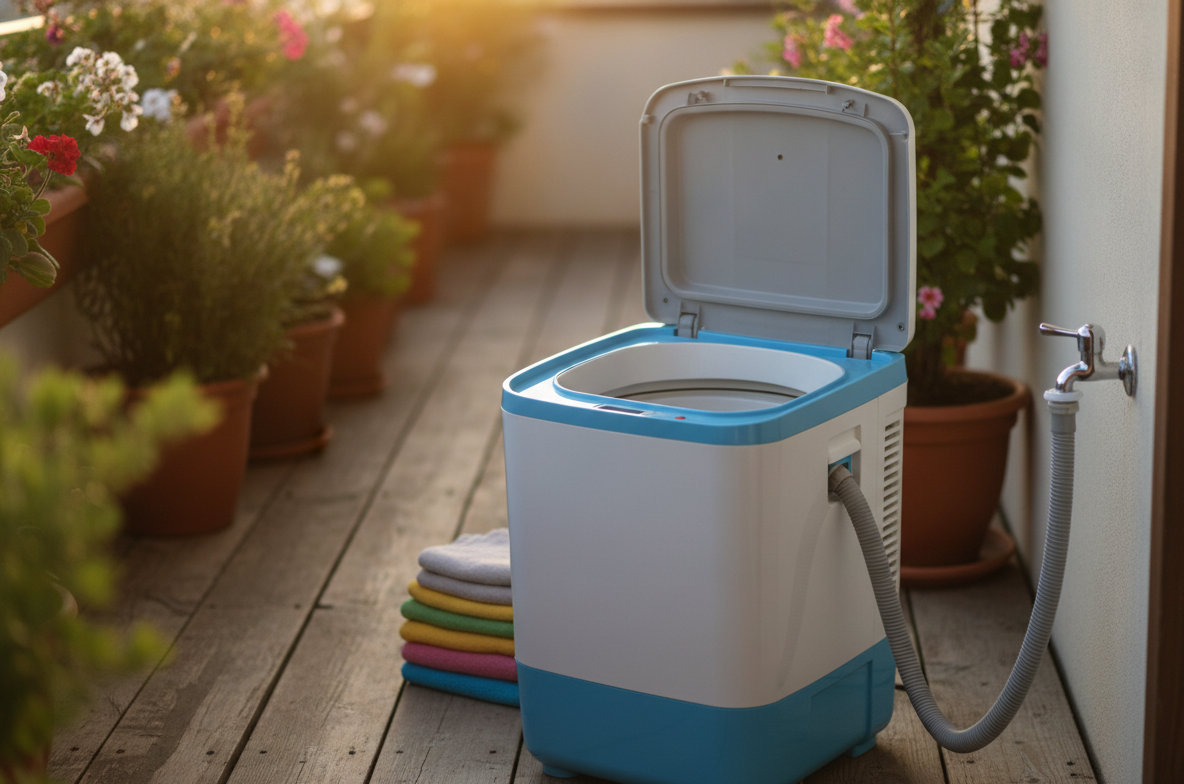
- Are hoses connected properly? The fill hose must be securely attached to both the faucet and the washing machine's water inlet port. A loose connection can prevent water flow or cause leaks.
Cost: Free. This fix usually requires no parts or tools.
2. Inspect the Fill Hoses for Kinks or Damage
Even with an open water supply, a compromised hose will restrict or stop water flow. Portable washing machines often use flexible hoses that can kink easily, especially in tight spaces common in small apartments, RVs, or dorms.
What to Check:
- Kinks: Visually inspect the entire length of the fill hose. Straighten any bends or kinks. Reposition the machine or hose to prevent future kinking.
- Damage: Look for cracks, punctures, or bulges in the hose. A damaged hose can leak or prevent proper water pressure from reaching the machine.
- Hose Type: Using a high quality, reinforced hose can prevent kinking and offer better durability. The Stainless Steel Washing Machine Hose With Quick Connect is a universal type, made from 304-grade stainless steel. It offers a secure and leak-free connection, compatible with most washing machine brands.
If you find a damaged hose, replacement is necessary. This is a simple DIY task.
Cost: A new fill hose costs approximately $10-$30. The replacement process takes about 5-15 minutes.

- [Universal type] Suitable for most washing machines, compatible with most brands on the market, Suitable.
- The stainless steel braided water supply hose is made of 304-grade stainless steel, which is.
- [Quick Connect] faucet adapter (55/64 inch/22 mm female thread size and 15/16 inch/24 mm male thread size).
- [Easy Installation] The washing machine water inlet hose can be bent in various installation environments.
3. Clean the Water Inlet Filters
Small mesh filters are located where the fill hoses connect to the washing machine. These filters catch sediment and debris from the water supply, protecting the internal components. Over time, these can become clogged, severely restricting water flow.
How to Clean:
- Turn off the water supply: Close the faucet completely.
- Disconnect hoses: Unscrew the fill hoses from the back of the washing machine.
- Locate filters: The small mesh screens are visible inside the inlet ports.
- Remove and clean: Use needle-nose pliers to gently pull out the filters. Rinse them under running water to remove any debris. A soft brush can help with stubborn clogs.
- Reinstall: Place the clean filters back into the inlet ports, reconnect the hoses, and turn the water supply back on.
Perform this cleaning every few months, especially if you live in an area with hard water or older plumbing.
Cost: Free. This only requires basic tools you likely already own.
4. Troubleshoot the Lid Switch Assembly
Most portable washing machines have a safety lid switch. This prevents the machine from operating, including filling with water, if the lid is open or not properly closed. A faulty lid switch will tell the machine the lid is open even when it is shut.
How to Check:
- Listen for a click: When you close the lid, you should hear a distinct click, indicating the switch has engaged.
- Visual inspection: Examine the lid and the area where it meets the machine for any broken plastic pieces that might prevent the switch from making contact.
- Bypass (for testing only): For some older models, you might temporarily bypass the switch to test if it is the problem. This usually involves connecting two wires, but consult your machine's manual for safety. Do not operate the machine with a bypassed lid switch for washing.
If the lid switch is faulty, it will need replacement. This is a common issue and replacement parts are usually available online or from appliance parts suppliers.
Cost: A new lid switch typically costs $20-$50. Professional replacement can add $50-$100 in labor.
5. Examine the Water Inlet Valve
The water inlet valve is an electrically controlled component that opens to allow water into the machine and closes to stop it. If this valve fails, it will not open, and no water will enter the tub.
Symptoms of a Faulty Valve:
- No water enters the machine at all, even with a strong water supply.
- The machine tries to fill but only a trickle of water appears.
- You might hear a buzzing noise, but no water flows.
How to Check (Advanced):
This typically requires a multimeter to test for continuity or proper voltage. Unplug the machine first. Access the valve (usually at the back, where the hoses connect). Test the solenoids on the valve. If there is no continuity or if the valve does not receive power when it should, it is likely defective.
Replacing the water inlet valve is a moderately difficult DIY task. It involves disconnecting hoses, removing panels, and re-wiring. If you are uncomfortable with electrical components, call a professional.
Cost: A new water inlet valve costs $30-$80. Professional repair can range from $100-$200.
6. Troubleshoot the Pressure Sensor (Water Level Sensor)
The pressure sensor, also called the water level switch, detects the amount of water in the tub. If this sensor malfunctions, it might incorrectly believe the tub is already full, or it may not register any water at all, preventing the machine from filling further.
Symptoms of a Faulty Sensor:
- The machine fills briefly and then stops.
- The machine overfills.
- The machine does not fill at all, even though other components seem fine.
How to Check (Advanced):
The pressure sensor is connected to the tub by a small air tube. Check this tube for kinks, cracks, or blockages. A clogged tube can give false readings. Testing the sensor itself requires a multimeter and knowledge of its specific resistance values, usually found in the service manual.
Replacement of a pressure sensor is a more involved repair. It often requires access to the machine's control panel or internal components. Seek professional help if you are unsure.
Cost: A new pressure sensor costs $50-$150. Professional replacement typically runs $150-$250.
7. Consider the Main Control Board
The main control board is the brain of the washing machine. It sends signals to all components, including the water inlet valve. If the control board is faulty, it might not send the signal to open the valve, even if everything else is working.
Symptoms of a Faulty Control Board:
- Multiple functions fail simultaneously.
- Error codes appear on the display (consult your manual for code meanings).
- The machine seems completely unresponsive or behaves erratically.
Diagnosing a faulty control board is difficult without specialized equipment. It is typically a last resort after ruling out all other causes. Replacing a control board is often the most expensive repair.
Cost: A new control board can cost $100-$300 or more, depending on the machine model. Professional repair can be $150-$400+, sometimes approaching the cost of a new portable washing machine.
When to Call a Professional
You can handle simple fixes like checking water supply, straightening hoses, and cleaning filters. If the issue involves electrical components, internal wiring, or requires dismantling the machine's core, consider calling a qualified appliance technician. This is especially true if you are unsure about safety procedures or electrical testing.
Alternative Hoses for Portable Washing Machines
Beyond the top pick, several other hose options can serve as reliable replacements for your portable washing machine, offering different features and price points. The right hose makes sure your appliance receives a consistent water flow.
SUIGETSU Washing Machine Hose 7FT
This SUIGETSU hose features an anti-burst PVC water supply line, designed for durability and high pressure. Its three-layer design with embedded fiber provides resistance to wearing. It includes a quick-connect adapter and brass nuts, ensuring a watertight seal. The connectors are adaptable, fitting cylindrical interfaces with diameters between 0.55-0.78 inches, making it a versatile option for many portable washers.

- Features adaptable connectors designed for cylindrical interfaces with diameters between 0.55-0.78 inches.
- Made of high quality PVC material, Three-layer design, resistance to wearing, high pressure, Embed fiber.
- heavy duty connectors with rubber washers ensure watertight seal and prevent leaks during operation
- Quick and tool-free setup with standard threaded fittings that attach directly to washing machine and.
Portable Washing Machine Hoses (Compact Washer Water Supply Line)
Designed specifically for compact washers, this hose provides an easy water inlet connection. It includes a faucet adapter for portable washing machine hoses and another for basin fitting, making it suitable for various hookup scenarios.

- Portable Washing Machine Hoses: This washer hoses is designed for use with portable washing machines.
- Water Inlet Connection:faucet adapter for portable washing machine hose, easy inlet connection,suitable.
- Faucet Adapter for Portable Washer:One for washing machine hoses faucet adapter, one for basin fitting.
- Easy installation :portable washing machine hose Features a 90 degree elbow quick connection for easy.
Final Thoughts
Most portable washing machine filling problems are not severe. Start with the easiest checks, like the water supply and hose condition. Systematically work through each potential cause. Many issues can be resolved quickly with basic troubleshooting. If the problem persists after checking these common culprits, then consider the more complex internal components or seeking professional assistance.